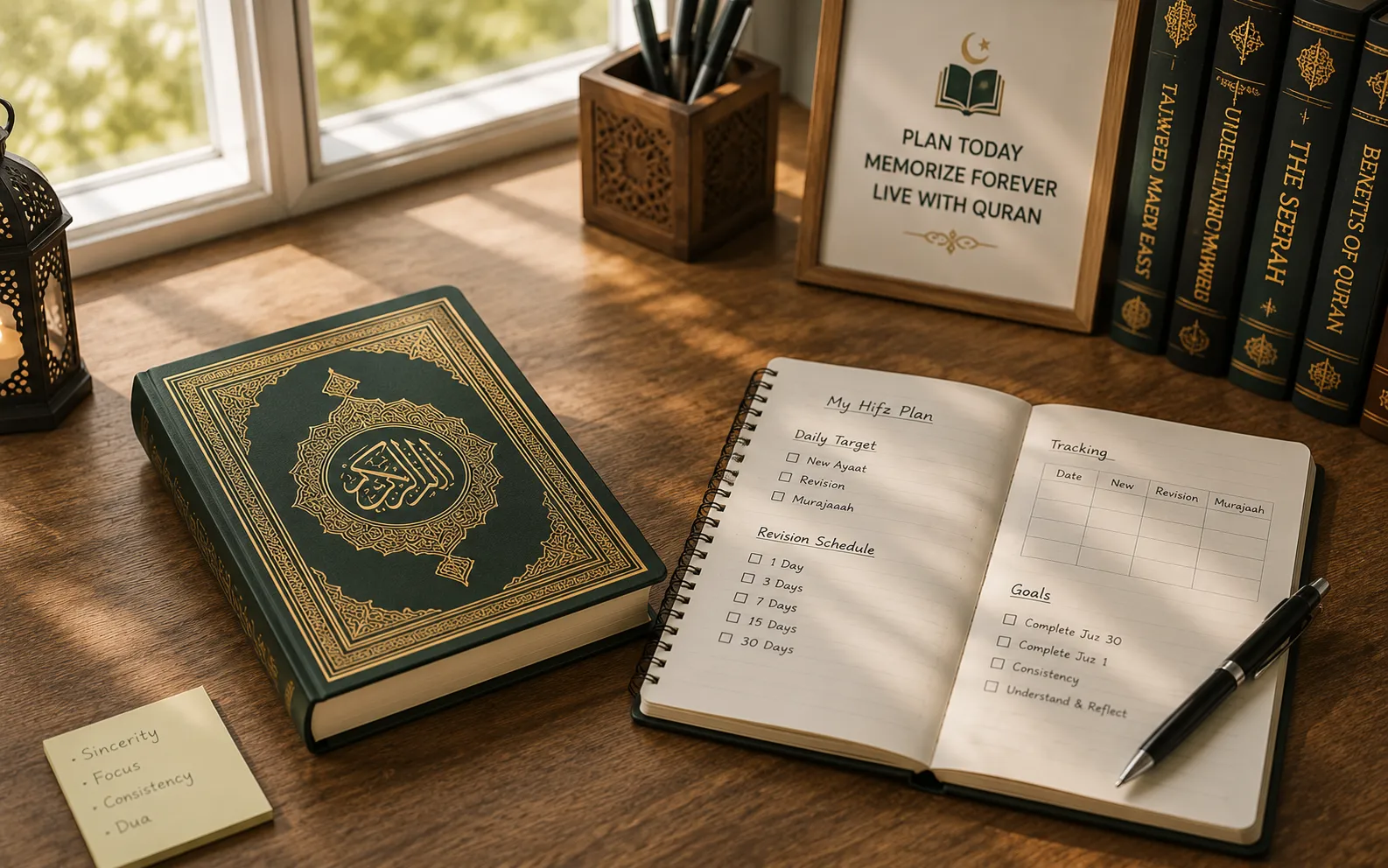

Ask someone which portion they revised this week and you will often get a thoughtful pause. Ask which they revised last month and the pause gets longer. This is the central problem of revision: without a system, you revise what comes to mind, and what comes to mind is what you already know well.
Why free-choice revision fails
Given a choice, people revise what feels good to revise. Strong portions flow, feel satisfying, and confirm that the memorisation is intact. Weak portions are effortful and mildly unpleasant, so they get postponed — and postponement is exactly what weakened them.
The result is predictable: a small number of very strong sections, and a growing tail of portions untouched in months. The overall picture feels acceptable because the parts you check are the parts that are fine.
The portions you avoid revising are, by definition, the ones that most need it. Any system that lets you choose will select against them.
Start with an honest test
Before building any schedule, find out what you actually hold. Recite from every part — not a favourite page, a randomly chosen one — to someone qualified, and grade each honestly:
- Solid — recited without prompting or hesitation
- Shaky — completed but with pauses or a prompt needed
- Gone — could not proceed without significant help
Most people find this uncomfortable, and most find the result differs from their expectation in both directions. Some pages they worried about are fine; some they assumed were secure are not. That map is what makes the rest of the plan possible.
Repair before rotation
If several portions came out weak, fix those before starting a general cycle. A rotation covering everything cannot simultaneously rebuild five sections that have degraded — it will keep touching them briefly and never bring them back.
Concentrated repair is faster than it sounds. Relearning something you once knew properly takes a fraction of the time the original memorisation did, often days rather than weeks per page.
Building a rotation that covers everything
Once the weak portions are repaired, the cycle is arithmetic. Take what you hold, take the minutes you can commit weekly, and divide. The result tells you your cycle length — how many days pass before any given portion comes around again.
As a rough guide for the complete Quran:
- Three sessions a week, thirty minutes: roughly a five to six week cycle
- Five sessions a week, thirty minutes: roughly a three week cycle
- Five sessions a week, sixty minutes: roughly a ten day cycle
Shorter cycles hold memorisation more firmly, but a longer cycle you actually complete beats a shorter one you abandon. Choose the schedule you can protect for a year, not the one that looks best written down.
The part people skip
Reciting alone confirms nothing. You cannot detect drift in your own recitation, because the drifted version is what you are comparing against. A rotation without a listener produces confidence rather than accuracy.
This does not mean every session needs a teacher. But some proportion of your revision must be heard by someone qualified, and the portions you feel least sure about should be prioritised for those sessions rather than saved for later.
Preparing for Ramadan
Most people want to recite more in Ramadan, and many plan to complete the Quran during the month. Both are far easier if the groundwork is done in advance. Starting an intensive schedule two to three months beforehand means every portion has been heard and confirmed before Ramadan begins, so what you are managing during the month is stamina rather than recall.
Beginning that work in the final fortnight before Ramadan is the most common mistake, and it turns a month of recitation into a month of anxiety.
وَالَّذِينَ جَاهَدُوا فِينَا لَنَهْدِيَنَّهُمْ سُبُلَنَا
And those who strive for Our sake — We will surely guide them to Our paths.
What to do this week
If your revision has no structure at the moment, do not build a perfect schedule. Do the assessment first. Almost everyone discovers their plan needs to be different from the one they were about to make, and the map takes a week to produce.